If you’re searching for how to register my dog in Roberts County, Texas, the most important thing to know is that pet “registration” and licensing are usually handled locally—either by a city office (if you live inside city limits) or through county-level offices and law enforcement (if you live in unincorporated areas). In a small county like Roberts County, the practical “starting point” is to confirm which local office manages complaints, rabies enforcement, and any local dog license rules.
This page explains how a dog license in Roberts County, Texas typically works, what rabies documentation is required, and where to register a dog in Roberts County, Texas by contacting official local offices (not vendors or third-party services).
Where to Register or License Your Dog in Roberts County, Texas
Because dog licensing is often handled at the county or city level, the offices below are examples of official local government contacts in Roberts County that residents commonly use to confirm requirements, ask about local registration rules, and get direction on rabies enforcement and animal control concerns. If an item is not listed (such as public email or lobby hours), it was not available from the official source and is intentionally omitted.
Roberts County Sheriff’s Office
Ask about animal control dog license Roberts County, Texas procedures, who issues any local tags, and what documentation you should bring (rabies certificate, ID, and proof of residence).
Roberts County Courthouse (County Offices)
The courthouse is the central hub for county administration. If you’re not sure which county office handles pet licensing or rabies paperwork locally, start here and request the correct department.
Roberts County Tax Assessor-Collector (County Tax Office)
This office is listed as an official county contact point. While tax offices typically focus on vehicle/title matters, residents sometimes use county offices at the courthouse to confirm which department (if any) processes local pet tags, fees, or records.
Roberts County Clerk
The County Clerk’s office can help route you to the correct local authority if you need to confirm whether Roberts County issues a countywide dog license or whether requirements are handled by the City of Miami or another local entity.
City of Miami (Roberts County seat) — City Office Contact
If you live inside Miami city limits, ask the city whether a city dog license or tag is required, and what proof (rabies vaccination certificate, ID, address) is needed to register your dog locally.
Overview of Dog Licensing in Roberts County, Texas
What “registering” a dog usually means
In many Texas communities, “registering” a dog is another way of saying you’re obtaining a local dog license in Roberts County, Texas (or a city-issued pet tag). The details vary by location. Some places issue an annual tag; others tie the “registration” concept to rabies vaccination records (for example, requiring the dog to wear a rabies tag and the owner to keep a current rabies certificate).
Why the rules can feel different from one address to the next
Texas is a local-control state for many animal-related rules. That means the requirements for where to register a dog in Roberts County, Texas can depend on whether you live:
- Inside the City of Miami (city ordinances may apply), or
- Outside city limits in unincorporated Roberts County (county-level practices and law enforcement may apply).
If you’re specifically trying to find an animal control dog license Roberts County, Texas process, start by calling the Sheriff’s Office and ask who handles animal control calls and rabies enforcement for your area and whether any local licensing program is active.
How Dog Licensing Works Locally in Roberts County, Texas
Step 1: Confirm whether your address is under city rules or county-only rules
The first step in how to register my dog in Roberts County, Texas is identifying which local authority has jurisdiction:
- City residents (Miami): Call the City of Miami office and ask if the city issues dog licenses/tags, what the renewal cycle is, and whether there are leash/restraint rules that apply within city limits.
- County residents (outside city limits): Call the Roberts County Sheriff’s Office and ask who enforces animal-at-large rules and rabies compliance, and whether the county issues any registration tag or keeps records beyond rabies enforcement.
Step 2: Keep current rabies vaccination documentation
Even when there is no separate “license tag,” a current rabies vaccination is typically the core requirement that owners must be able to prove. Keep a copy of the rabies certificate in your records and consider storing a photo on your phone. If your dog is ever involved in a bite incident or is found running at large, rabies documentation is one of the first things authorities may ask for.
Step 3: Ask what proof and payment methods are accepted
If your city or county issues a dog license, ask what you need to bring (or send) before you make the trip. Common requirements include:
- Rabies vaccination certificate (current)
- Owner identification
- Proof of residency (especially if fees differ for residents vs. non-residents)
- Fee payment (ask about cash/check/card and any renewal schedule)
How Dog Licensing Works in Roberts County, Texas
Rabies vaccination is the baseline requirement in Texas
Regardless of whether your neighborhood has a formal tag program, Texas requires dogs and cats of a certain age to be vaccinated against rabies, and owners should be prepared to provide proof of vaccination when requested by the appropriate authority. In practice, this requirement is part of how local governments manage public health risks and bite investigations.
Licensing vs. rabies proof: what’s the difference?
A local dog license (when offered) is a local-government registration record that may come with a tag and may help fund local services. Rabies proof is a public health requirement: the certificate shows the vaccination date and veterinarian information and is used during enforcement, quarantine decisions after bites, and compliance checks.
If you’re unsure whether Roberts County issues a “dog license”
Not every Texas county operates a countywide pet licensing office. If you can’t find a posted program, that does not mean there are no rules—it usually means the system is handled through local ordinances, rabies enforcement procedures, and complaints handled by local authorities. For the most accurate answer for your address, call local government first and ask directly, “Do you issue a dog license or registration tag for residents at my address, and if so, which office processes it?”
Service Dog Laws in Roberts County, Texas
Service dog status is not the same as a dog license
A common source of confusion is mixing up a local dog license with service dog rights. A dog license in Roberts County, Texas (if required locally) is a local registration process. A service dog, on the other hand, is defined by what the dog is trained to do for a person with a disability.
No online “registration” is required to be a service dog
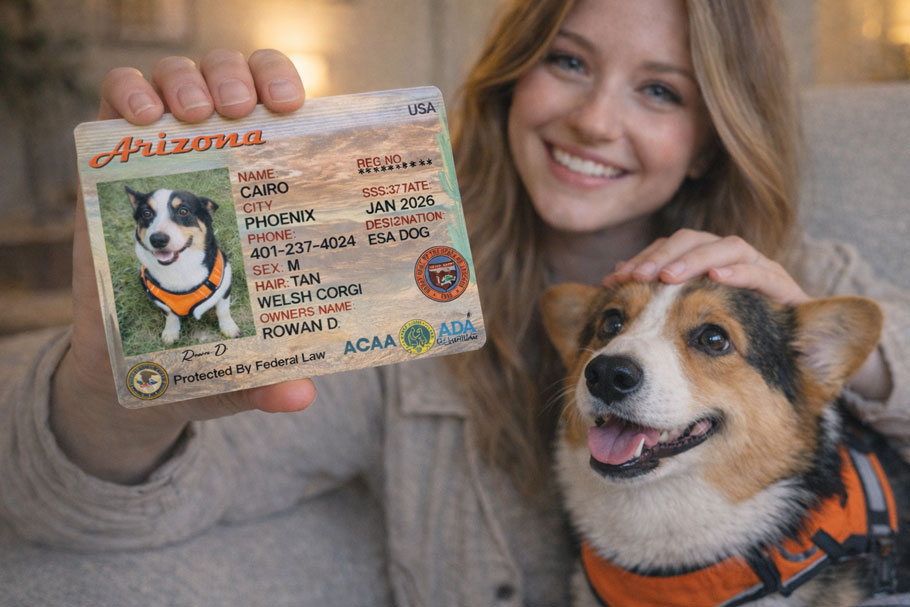
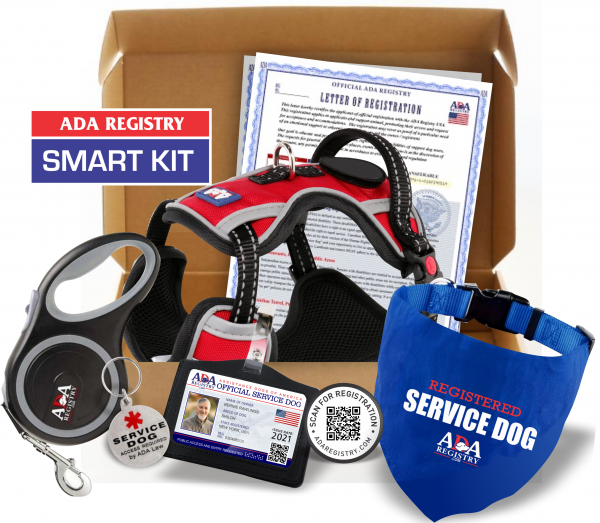
Service dogs are generally recognized based on their trained tasks and their handler’s disability-related need—not because the handler purchased an ID card or registered the animal with a private company. Be cautious of pay-to-register offers; they do not replace local licensing rules, and they do not create legal service dog status.
Local licensing rules can still apply
Even if a dog is a service dog, local requirements like rabies vaccination and any applicable local dog licensing/registration rules can still apply. If your local office issues tags, ask whether there are fee waivers or documentation options available, but do not assume a service dog is automatically exempt from all local registration steps.
Emotional Support Animal Rules in Roberts County, Texas
Emotional support animals are different from service dogs
An emotional support animal (ESA) provides comfort that can help with symptoms of a disability, but ESAs are not the same as service dogs trained to perform specific tasks. This difference matters because public-access rules that apply to service dogs generally do not apply in the same way to ESAs.
ESAs do not replace local licensing requirements
Having an ESA letter or documentation for housing-related needs does not automatically satisfy local rules for rabies vaccination or any city/county dog tag program. If you’re trying to determine where to register a dog in Roberts County, Texas, your steps are the same: confirm local jurisdiction, keep rabies vaccination current, and ask your city/county office whether a local license or tag is required.
What to ask your local office if your dog is an ESA
- Does the city or county require a license/tag for dogs at my address?
- What rabies documents are acceptable and how current must they be?
- Are there any additional local restraint, nuisance, or at-large rules I should know about?
Frequently Asked Questions
Is there one official countywide dog licensing office in Roberts County?
Roberts County residents should confirm locally because Texas pet licensing is often run at the city level and may not be centralized in a single county department. The best starting points are the City of Miami office (if you live in city limits) or the Roberts County Sheriff’s Office (for county jurisdiction questions and animal control enforcement direction).
What’s the fastest way to figure out how to register my dog in Roberts County, Texas?
Call and ask two questions: (1) “Does my address fall under city rules or county-only rules?” and (2) “Which office issues dog licenses/tags or keeps registration records?” This is the simplest way to find the correct local process without relying on third-party listings.
What proof do I typically need to get a local dog license or tag?
When a local tag is required, the most common requirement is proof of current rabies vaccination, plus identification and proof of residency. Fees vary by local ordinance, and your local office can confirm accepted payment methods and renewal timelines.
Does a rabies tag count as a dog license?
Not always. A rabies tag indicates vaccination and is tied to public health compliance. A local dog license is a local government registration record. Some communities treat vaccination/tag compliance as the practical “registration,” while others issue a separate municipal license tag.
If my dog is a service dog, do I still need a local dog license?
Possibly. Service dog status and local licensing are separate concepts. Service dogs may still need to comply with rabies vaccination rules and any locally required registration steps. Ask your local office whether a waiver applies in your jurisdiction rather than assuming an exemption.
Are emotional support animals (ESAs) treated the same as service dogs?
No. ESAs and service dogs have different legal definitions and different access rights. An ESA designation also does not replace local rabies vaccination requirements or any applicable local licensing rules.
Next Step: Call the Correct Local Office
If you need the most accurate instructions for how to register my dog in Roberts County, Texas, start with your local jurisdiction: city residents should call the City of Miami office; county residents should call the Roberts County Sheriff’s Office. Ask whether your location has a formal local license/tag program and what documents and fees apply for your household.